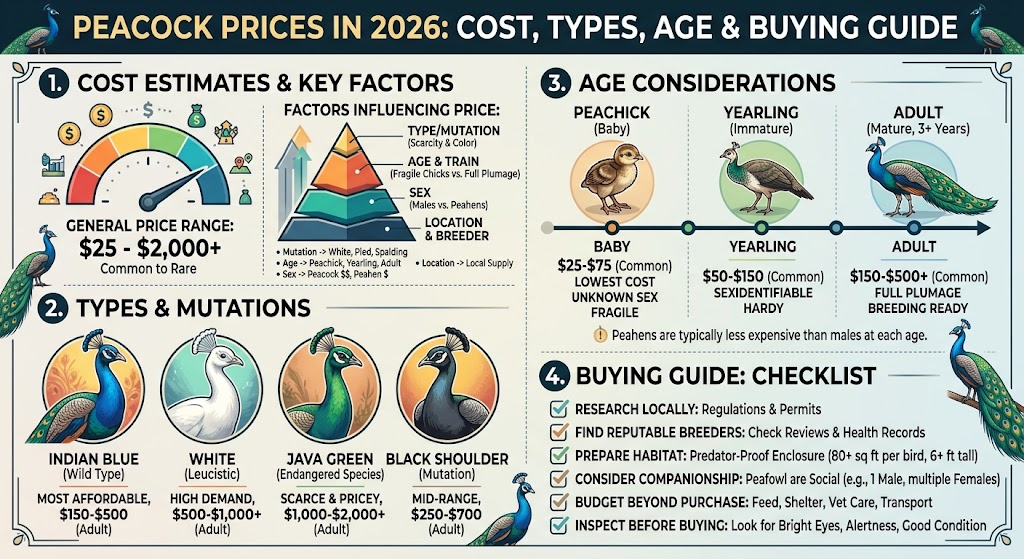

If you are planning to buy a peacock, you may wonder about the real peacock prices in your area. The answer is not always simple. A young peachick can cost much less than a mature breeding bird. Rare colors can also cost far more than common blue peafowl. Seller location can change the price too. In Pakistan, recent listings show birds and pairs at many different prices. Some young birds are listed for only a few thousand rupees. Mature birds and special varieties can reach much higher amounts.
This guide explains the peacock prices animal buyers may see in the market. It also explains what makes one bird more expensive than another. You will learn about age, sex, color, breed, health, and breeding value. We will also cover food, housing, transport, and other ownership costs. The goal is simple. You should know what you are paying for before you bring a beautiful peafowl home.
Peacock Prices at a Glance
The table below gives a useful starting point for buyers. These are not fixed national prices. They are practical market examples based on recent listings and breeder information. Prices can change based on the bird’s quality, age, location, and seller. A buyer should always inspect the bird before paying.
| Peacock Detail | Typical Price Guide | Main Price Factors |
| Young peachick | PKR 4,000–10,000+ | Age, color, health |
| Young Indian Blue | PKR 4,000–10,000+ | Age and quality |
| Adult male | PKR 15,000–40,000+ | Age, feathers, breeding value |
| Adult female | PKR 15,000–30,000+ | Age and breeding value |
| Black Shoulder bird | PKR 15,000–30,000+ | Color and quality |
| Peacock pair | PKR 25,000–55,000+ | Sex, age, variety |
| Rare color varieties | Higher than common types | Rarity and genetics |
| Premium breeding birds | Can be much higher | Bloodline and quality |
Recent Pakistan advertisements show examples such as a female at Rs. 16,000, a four-year-old Indian Blue male at Rs. 35,000, and pairs around Rs. 25,000 to Rs. 55,000. These examples show why there is no single fixed market price.
What Determines Peacock Prices?
Several factors affect the final price of a peafowl. The first factor is age. Very young chicks usually cost less than mature birds. However, older birds can be more valuable when they are healthy and ready for breeding. Sex also matters. A mature peacock has the famous long train. A peahen does not have the same display feathers. Yet a healthy female can be valuable for breeding. This can make some females surprisingly expensive.
Color and variety also affect peacock prices. Indian Blue is one of the most common types. Special colors may have higher prices because they are less common. Black Shoulder, White, Pied, and other varieties can attract collectors and breeders. The bird’s condition matters too. Bright feathers, strong legs, clear eyes, good weight, and active behavior are positive signs. A seller may also charge more for a proven breeding bird.
Peacock Prices by Age
Age is one of the easiest ways to understand peacock prices. Peachicks are young and need more time before they become mature birds. They can be attractive to buyers who want to raise their own birds. However, chicks require careful feeding, warmth, clean housing, and protection from predators. Their sex may also be difficult to confirm when they are very young.
Juvenile birds can cost more because they are closer to adulthood. Their colors and body shape are easier to judge. Mature birds often have the highest practical value when they are healthy and ready for breeding. Recent breeder listings in the United States show the same general pattern. Adult males and females can cost hundreds of dollars, with females sometimes priced higher.
Peacock Prices for Male Birds
A mature male peacock is usually what people imagine when they hear the word peacock. He develops long upper-tail feathers and uses them during courtship displays. A strong adult male can be valuable to breeders. Feather quality, age, color, body condition, and breeding history can all affect his price.
Recent Pakistan listings show adult males offered at very different prices. One four-year-old Indian Blue male was listed at Rs. 35,000. Other local listings show adult or specialty birds around similar or higher levels. These are asking prices, not guaranteed final selling prices.
Peacock Prices for Female Birds
Female peafowl are called peahens. They are often less colorful than males, but they play an important role in breeding. A healthy female can be valuable because she can produce future chicks. Age, health, fertility, color genetics, and breeding history can all affect her value.
A recent Islamabad listing offered a two-year-old female for Rs. 16,000. Another listing offered a 13-month-old Indian Blue peahen for Rs. 15,500. These examples show that female birds can have a strong market value.
Peacock Prices for Pairs
Buying a pair can be useful if your goal is breeding. A pair normally includes one male and one female. However, not every advertised pair has the same quality. Some pairs are young. Others are mature breeding birds. Some may also contain special colors or patterns.
Recent Pakistan listings show pair prices around Rs. 25,000, Rs. 35,000, Rs. 40,000, and Rs. 55,000. A Black Shoulder pair has recently been advertised at Rs. 55,000 by a Pakistan bird seller.
This means buyers should compare the complete package instead of looking only at the number. Ask about age, sex, health, variety, breeding history, and transport. A cheaper pair may not always be the better deal. Two healthy birds with clear information can provide better value over time.
Indian Blue Peacock Prices
Indian Blue is one of the best-known peafowl varieties. It has a blue neck and a colorful male train. It is also widely recognized by hobby keepers. Because it is common, it can be easier to find than some rare varieties. This can make it a practical starting point for new owners.
Current Pakistan listings show Indian Blue chicks, females, and adult males at different prices. For example, one listing offered Indian Blue chicks at around Rs. 4,000. Another offered a mature Indian Blue male for Rs. 35,000. The large difference comes from age and maturity.
Black Shoulder Peacock Prices
Black Shoulder peafowl are popular among collectors because of their distinctive appearance. Their coloring can make them more attractive to people who want something different from the standard Indian Blue bird. Their price can therefore be higher in some markets.
Recent Pakistan listings show Black Shoulder birds at prices ranging from young-bird levels to much higher adult prices. One seller currently lists a Black Shoulder pair at Rs. 55,000. Classified listings also show individual Black Shoulder birds around Rs. 15,000.
The important point is that color alone should not decide your purchase. Look at the complete bird. A rare color does not automatically mean the bird is healthy. Check the eyes, feet, feathers, body condition, and behavior before buying.
White and Pied Peacock Prices
White and Pied peafowl are also popular among ornamental bird keepers. Their unusual appearance can make them more expensive than common birds. White peafowl have a mostly white appearance. Pied birds have a mixture of normal and white feather patterns.
The final price depends heavily on the bird’s quality and genetics. A young bird may be much cheaper than an adult breeding bird. Sellers may also charge more for birds with attractive markings. Buyers should ask whether the bird’s color is clearly established. This is especially important when buying young birds.
Peacock Prices Animal: What Does the Phrase Mean?
The phrase peacock prices animal usually refers to the cost of buying a peacock or peafowl. It can include a single bird, a pair, or a young peachick. Some people also use the phrase when searching for the cost of keeping a peacock as a pet or ornamental bird.
The purchase price is only one part of ownership. A peafowl needs space to move, safe shelter, food, clean water, and protection from predators. It can also create costs for fencing, transport, bedding, and veterinary care. A smart buyer calculates these costs before choosing a bird. This prevents the common mistake of spending the whole budget on the bird itself.
How Much Does a Peacock Cost to Keep?
The purchase price is only the beginning. Peafowl are large birds that need more room than many common backyard birds. They need a secure place to sleep and protection from dogs, foxes, and other predators. They also need clean water and suitable feed.
Housing can become one of the biggest expenses. A strong enclosure should give the birds enough room to walk and move naturally. Tall fencing or netting can also be useful because peafowl can fly and perch in high places. Feed costs depend on the bird’s age, local feed prices, and the diet you choose. Veterinary care should also be included in your budget.
What to Check Before Buying a Peacock
Do not buy a peacock only because it looks beautiful. First, watch the bird for a few minutes. A healthy bird should appear alert and active. Look for clear eyes and clean feathers. Check whether the bird walks normally. Watch for breathing problems, unusual weakness, swelling, or obvious injuries.
Ask the seller about the bird’s age and sex. If the bird is advertised as a special variety, ask what makes it that variety. For breeding birds, ask about previous breeding results when possible. You should also ask about vaccination, parasite treatment, feeding, and recent illness.
Online listings can be useful for comparing peacock prices, but they should not replace inspection. Some listings may be old or may describe a different bird than the one currently available. Recent classified ads can change quickly.
Should You Buy a Peacock Chick or Adult?
A peachick can be a good choice for someone who enjoys raising young birds. The initial purchase price may be lower. You also get the experience of watching the bird grow. However, chicks need more attention and careful management. You may also have to wait before you know exactly how the adult bird will look.
An adult is easier to evaluate. You can see the bird’s size, feathers, body shape, and overall condition. Sex is also easier to identify. If your goal is breeding soon, an adult bird may make more sense. If your main goal is raising a bird over time, a chick may fit your plans better.
Hidden Costs New Peacock Owners Often Miss
Many new buyers focus only on peacock prices and forget about the other expenses. Transport is one example. Moving a large bird safely can require planning. A secure carrier may also be needed. Housing is another major expense. A weak enclosure can allow the bird to escape or expose it to predators.
Feed is an ongoing cost. Water containers must also be cleaned often. You may need bedding and cleaning supplies. Veterinary care can become important if the bird becomes sick or injured. These expenses can vary widely by location. A simple budget should therefore include both the purchase price and several months of care.
Is a Cheap Peacock Always a Good Deal?
Not necessarily. A very low price can be attractive, but it should make you ask more questions. The bird may be young, unhealthy, poorly conditioned, or incorrectly described. The seller may also be trying to move a bird quickly. None of these things automatically mean the bird is bad, but they deserve attention.
Compare several birds before buying. Check their age, size, condition, and variety. Ask why one bird costs less than another. If possible, see the bird in person. A healthy bird with clear details may be worth paying more for than a cheap bird with unknown history.
Where Can You Find Peacocks for Sale?
Peafowl can be found through breeders, bird sellers, farms, and classified marketplaces. Local sellers can be useful because you may be able to inspect the bird before buying. Online marketplaces can also help you compare prices across different cities.
Recent Pakistan marketplaces show listings from cities including Karachi, Islamabad, Lahore, Faisalabad, Multan, and other areas. Prices vary considerably between individual sellers.
When buying online, use extra care. Ask for recent photos or videos. Confirm the bird’s location. Do not rely only on old advertisements. Meet safely when possible. Inspect the animal before completing the payment.
How to Save Money When Buying a Peacock
The best way to save money is to compare quality rather than simply choosing the lowest number. Look at several sellers and record the age, sex, variety, and condition of each bird. This gives you a better idea of the local market.
Buying a common variety can also reduce the cost. Indian Blue birds are generally easier to find than rare color varieties. Buying directly from a trusted local breeder may also reduce transport expenses. However, do not sacrifice bird health to save a small amount of money.
Are Peacocks Good Pets?
Peafowl can be fascinating animals for people with enough outdoor space. Their colors and behavior make them enjoyable to watch. A mature male can also put on an impressive display. However, they are not ideal for every home.
Peafowl need space and can make loud calls. They may wander if their enclosure is not secure. They can also fly to roofs, trees, and other high places. Before buying one, think about your neighbors and available space. A large rural property may be more suitable than a small urban yard.
Peacock Care Basics for New Owners
Good care starts with clean water and suitable food. The diet should match the bird’s age and needs. Young birds require special attention as they grow. Adult birds need enough food to maintain good body condition. Fresh water should always be available.
Shelter is equally important. The birds need protection from extreme weather and predators. Their sleeping area should stay dry and secure. Clean the enclosure regularly to reduce waste and unpleasant smells. Watch the birds every day. Small changes in appetite, movement, or behavior can be early signs of a problem.
Final Thoughts on Peacock Prices
Understanding peacock prices is about more than finding the cheapest bird. The right choice depends on age, sex, variety, health, location, and your reason for buying. Recent Pakistan listings show that young chicks may sell for several thousand rupees, while mature birds and pairs can cost tens of thousands. Special varieties may cost even more.
Before buying, compare several listings and inspect the bird carefully. Ask clear questions about age, health, breeding history, and color. Also prepare your enclosure before the bird arrives. A beautiful peacock is a long-term responsibility, not simply a decoration. If you plan your budget carefully, you can make a smarter purchase and give your bird a safe and comfortable home.
FAQs About Peacock Prices
1. What is the average price of a peacock?
There is no single average price because many factors affect the cost. In Pakistan, recent listings show young chicks from several thousand rupees. Mature males, females, and pairs can cost much more. One current marketplace shows listings ranging from young birds around Rs. 4,500 to adult and specialty birds above Rs. 30,000.
2. Are female peacocks cheaper than males?
Not always. Female peafowl are called peahens and can have strong breeding value. A healthy adult female may cost as much as, or more than, some males. Recent Pakistan listings include a two-year-old female at Rs. 16,000 and a 13-month-old female at Rs. 15,500.
3. How much does a peacock pair cost?
Pair prices vary widely. Recent Pakistan advertisements show pairs around Rs. 25,000 to Rs. 55,000. Special colors and mature breeding birds may cost more. Always confirm whether the advertised price covers both birds and ask about their ages and sexes.
4. Are peacock chicks cheaper than adult birds?
Usually, young chicks cost less than mature breeding birds. However, the price depends on color, health, seller, and location. Chicks also require more careful early care. If you want a bird for immediate breeding, an adult may provide better value despite its higher purchase cost.
5. Why are some peacocks so expensive?
Rare colors, breeding quality, age, healthy condition, and strong genetics can increase the price. A mature bird with desirable features may be more valuable to breeders. Transport and local availability can also affect the final price.
6. What should I check before buying a peacock?
Check the bird’s eyes, feathers, feet, body condition, and movement. Ask about age, sex, health, diet, and breeding history. If the bird is advertised as a special variety, ask for clear details about its color and background. Most importantly, inspect the actual bird before paying when possible.