
Non-magnetic stamping parts play an important role in many modern industries. These parts are designed for applications where magnetic interference must be avoided. They are commonly used in electronics, medical equipment, aerospace systems, automotive components, and precision machinery. Manufacturers create these components through metal stamping, a process that shapes flat metal sheets into specific forms.
The demand for non-magnetic stamping parts continues to grow because many advanced devices require stable and reliable materials. A small magnetic reaction can affect sensitive equipment, sensors, and electronic systems. By choosing the right non-magnetic material and stamping process, manufacturers can produce accurate, durable, and cost-effective components for different applications.
What Are Non-Magnetic Stamping Parts?
Non-magnetic stamping parts are metal components manufactured from materials that have little or no magnetic attraction. Unlike standard carbon steel parts, these components are made from selected metals and alloys that help prevent magnetic interference.
The metal stamping process uses presses and specialized tools to cut, bend, form, or shape metal sheets. This method allows manufacturers to produce large quantities of identical components with good accuracy. The final parts can range from simple flat washers to complex precision components.
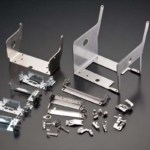
Non-magnetic stamping parts may include clips, brackets, connectors, shields, springs, housings, terminals, and other custom components. The exact design depends on the product and industry requirements. Material selection is especially important because not every metal is suitable for sensitive non-magnetic applications.
Common Materials Used for Non-Magnetic Stamping Parts
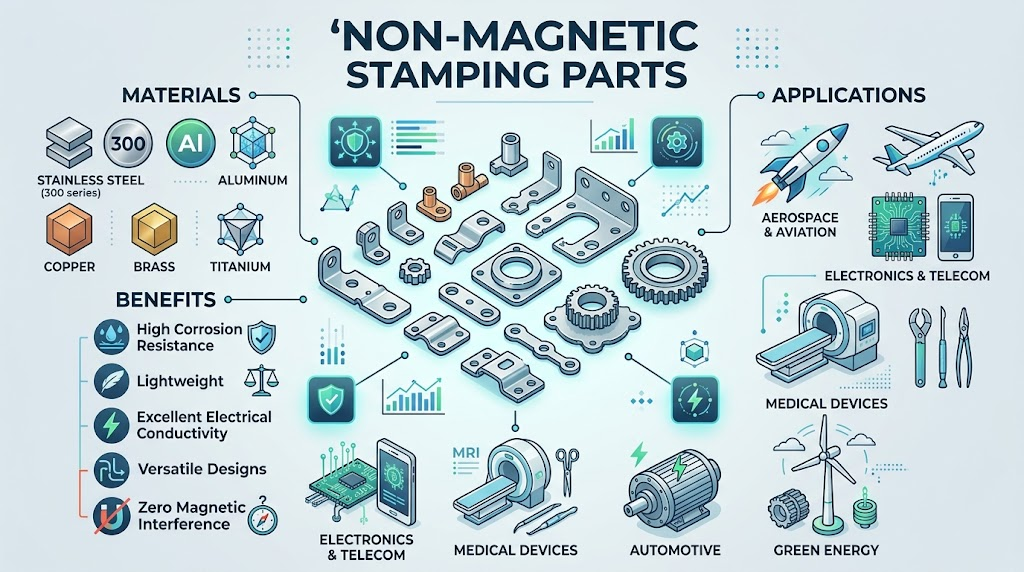
Several materials can be used to manufacture non-magnetic stamped components. Each material offers different properties, including corrosion resistance, strength, conductivity, and formability.
Austenitic stainless steel is one of the most popular options. Certain grades offer excellent corrosion resistance and generally low magnetic properties. Aluminum is another common choice because it is lightweight, corrosion-resistant, and naturally non-magnetic.
Copper and copper alloys are also widely used, especially in electrical and electronic applications. Brass and bronze can provide useful combinations of strength, conductivity, and corrosion resistance.
The best material depends on the final application. Manufacturers must consider the working environment, required strength, thickness, electrical performance, and magnetic requirements before beginning production.
How the Metal Stamping Process Works
The production of non-magnetic stamping parts usually begins with material selection and product design. Engineers determine the correct metal grade, thickness, dimensions, and tolerances. After that, the manufacturer develops a stamping die based on the component design.
During production, a metal sheet or coil moves through a stamping press. The tooling performs operations such as blanking, piercing, bending, embossing, and forming. Progressive stamping may complete several operations in one production sequence.
This process offers excellent efficiency for high-volume manufacturing. Once the tooling is properly designed, manufacturers can produce large numbers of consistent parts in a short time.
Quality control is also important. Dimensions, surface condition, and material performance must be checked regularly. For sensitive applications, manufacturers may also test the magnetic properties of the finished components.
Key Benefits of Non-Magnetic Stamping Parts
One major benefit of non-magnetic stamping parts is their ability to reduce magnetic interference. This is important in products containing sensitive sensors, measuring devices, electronic circuits, or medical equipment.
Another benefit is manufacturing efficiency. Metal stamping can produce large volumes of components quickly. This makes the process suitable for companies that need consistent quality and competitive production costs.
These parts can also offer excellent durability. Materials such as stainless steel, aluminum, and copper alloys can provide strong resistance to corrosion and environmental damage.
Design flexibility is another advantage. Custom tooling allows manufacturers to create components in different shapes and sizes. Holes, bends, tabs, slots, and other features can often be added during the stamping process.
Applications in the Electronics Industry
The electronics industry uses non-magnetic stamping parts in many products. Electronic devices often contain components that can be affected by unwanted magnetic fields. Therefore, material selection becomes an important part of product design.
Stamped components may be used in connectors, terminals, brackets, shields, battery contacts, and internal support structures. Copper-based materials are especially useful when electrical conductivity is required.
Precision is also essential in electronic manufacturing. Small errors can affect assembly or product performance. Metal stamping provides repeatable production, which helps manufacturers maintain consistent dimensions.
As electronic products become smaller and more advanced, the need for high-quality non-magnetic components is likely to remain important.
Medical and Scientific Equipment Applications
Medical and scientific equipment often requires materials with carefully controlled properties. Non-magnetic stamped components can be useful in devices where magnetic interference may affect performance.
Some imaging systems, laboratory instruments, monitoring devices, and precision equipment require specially selected materials. In these applications, manufacturers must consider more than magnetic behavior. Corrosion resistance, cleanliness, strength, and surface quality may also be important.
High-quality non-magnetic stamping parts can support reliable equipment performance. Manufacturers may use strict inspection procedures to ensure that components meet the required specifications.
Custom designs are often necessary because medical and scientific equipment may have unique size and performance requirements.
Aerospace and Automotive Uses
Aerospace and automotive industries also use stamped metal components in many systems. Certain applications require lightweight materials, corrosion resistance, and dependable performance.
Aluminum can be a useful choice when weight reduction is important. Stainless steel may be selected when higher strength and corrosion resistance are required. Copper alloys can be used for electrical components and connectors.
In aerospace manufacturing, component reliability is extremely important. Parts may operate under vibration, temperature changes, and demanding environmental conditions. Proper material selection and accurate manufacturing help improve long-term performance.
Automotive technology is also becoming more dependent on electronics and sensors. This creates additional demand for precision components that meet specific material requirements.
The Importance of Precision and Tolerance
Precision is one of the most important factors in manufacturing non-magnetic stamping parts. Even a small dimensional error can create problems during assembly or product operation.
Manufacturers use carefully designed dies and stamping equipment to maintain accurate dimensions. Advanced inspection tools can measure critical features and confirm that parts meet the required tolerances.
Material thickness must also remain consistent. Variations in thickness can affect bending, forming, and final product quality.
For complex components, manufacturers may perform secondary operations after stamping. These can include deburring, welding, polishing, plating, or surface treatment.
Working with an experienced manufacturer can help ensure that the final part design is suitable for efficient production.
Choosing the Right Non-Magnetic Stamping Parts Manufacturer
Choosing the right manufacturer is an important decision. A reliable supplier should understand material properties, tooling design, production requirements, and quality control.
Before selecting a manufacturer, businesses should review their experience with custom metal stamping. It is also useful to ask about available materials, production capacity, tolerance capabilities, and inspection processes.
Communication is another important factor. A good manufacturer should understand the technical requirements of the project and provide clear information about design and production options.
Companies should also consider whether the supplier can support both prototype development and large-scale production. This flexibility can make future product development easier.
Quality Control and Testing
Quality control helps ensure that non-magnetic stamping parts perform as expected. Inspection may begin with raw material verification and continue throughout the production process.
Manufacturers can inspect dimensions, thickness, surface finish, and other important characteristics. Specialized testing may also be used when magnetic properties are critical.
Statistical process control can help manufacturers identify production problems early. Regular equipment maintenance and tooling inspections also support consistent quality.
Documentation may be important for industries with strict requirements. Material certificates, inspection reports, and production records can provide useful information about component quality and traceability.
Future Trends in Non-Magnetic Stamping Parts
The future of non-magnetic stamping parts will likely be influenced by new technology and advanced manufacturing requirements. Electronics, medical devices, renewable energy systems, and automation equipment continue to create demand for specialized components.
Manufacturers are also improving automation and inspection technology. Automated systems can help increase production speed while maintaining consistent quality.
New materials and improved alloy technologies may create additional options for engineers. Lightweight and corrosion-resistant materials will continue to be important for many industries.
As products become smaller and more precise, manufacturers will need to produce increasingly complex components with tighter tolerances.
Conclusion
Non-magnetic stamping parts are essential components for industries that require reliable performance without unwanted magnetic interference. These parts can be manufactured from materials such as austenitic stainless steel, aluminum, copper, brass, and other suitable alloys.
The metal stamping process provides an efficient way to produce consistent, accurate, and cost-effective components. From electronics and medical equipment to aerospace and automotive systems, these parts support many important applications.
Choosing the correct material, design, tooling, and manufacturing partner is essential for achieving the best results. With proper engineering and quality control, non-magnetic stamping parts can provide durability, precision, and dependable performance for a wide range of modern products.
FAQs About Non-Magnetic Stamping Parts
1. What are non-magnetic stamping parts?
They are metal components produced through stamping processes using materials with low or minimal magnetic properties.
2. What materials are commonly used?
Common options include certain grades of stainless steel, aluminum, copper, brass, and bronze.
3. Where are these parts used?
They are used in electronics, medical devices, scientific instruments, aerospace systems, automotive equipment, and precision machinery.
4. Can non-magnetic parts be customized?
Yes. Manufacturers can create custom shapes, sizes, holes, bends, and other features based on specific requirements.
5. Why is material selection important?
The material affects magnetic behavior, strength, corrosion resistance, electrical conductivity, and manufacturing performance.
6. Can metal stamping support high-volume production?
Yes. Metal stamping is highly suitable for producing large quantities of consistent components efficiently.