
Aluminum stamping parts are widely used in modern manufacturing. They can be found in cars, electronics, appliances, aerospace equipment, construction products, and many other industries. Aluminum is lightweight, strong, corrosion-resistant, and easy to shape. These properties make it an excellent material for producing large quantities of precision components.
The stamping process allows manufacturers to create consistent parts quickly. Instead of machining every component individually, manufacturers use specialized dies and presses to form aluminum sheets into the required shape. This process can reduce production time and lower costs, especially for high-volume orders.
In this guide, you will learn what aluminum stamping parts are, how they are manufactured, their benefits, common applications, and important factors to consider when choosing a stamping supplier.
What Are Aluminum Stamping Parts?
Aluminum stamping parts are metal components produced by pressing aluminum sheets or coils into specific shapes. A stamping press uses force to push the material into or through a specially designed die. Depending on the design, the process can cut, bend, punch, form, or draw the aluminum.
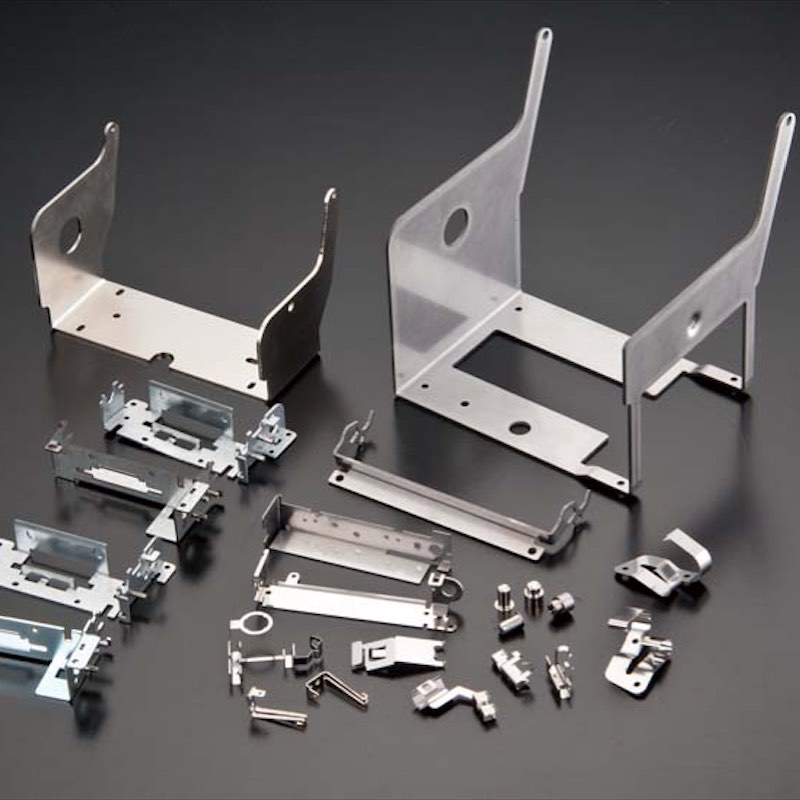
These parts can range from simple flat brackets to complex three-dimensional components. Manufacturers often choose stamping when they need thousands or millions of identical parts. The process offers good repeatability and can produce components with consistent dimensions.
Because aluminum is lighter than many other metals, stamped components can help reduce the overall weight of a finished product. This is especially important in industries such as automotive and aerospace, where reducing weight can improve efficiency and performance.
How the Aluminum Stamping Process Works
The manufacturing process begins with selecting the correct aluminum material. The aluminum may arrive as sheets, strips, or coils. Engineers then create a part design and develop the tooling required for production.
The material is placed into a stamping press. A die controls the final shape of the component. When the press applies force, the aluminum changes shape according to the die design. Some operations require only one press stroke, while complex parts may pass through several stages.
After stamping, the parts may go through additional processes. These can include trimming, deburring, cleaning, finishing, or inspection. Some aluminum stamping parts also require assembly with other components.
Modern production systems may use automated feeding equipment. This helps increase speed and improve consistency. Automation is particularly useful when producing large quantities of identical components.
Common Types of Aluminum Stamping Operations
Several stamping operations can be used to create aluminum components. The correct method depends on the part design and production requirements.
Blanking cuts a piece of aluminum into a specific shape. The removed piece becomes the finished part or a starting point for additional processing.
Punching creates holes or openings in the material. These holes may be used for screws, bolts, electrical connections, or assembly features.
Bending changes the angle of the aluminum without completely cutting it. This process is often used for brackets, clips, and structural components.
Deep drawing forms aluminum into deeper or more complex shapes. It is commonly used for housings, containers, and specialized components.
Embossing creates raised or recessed patterns. Manufacturers may use this operation for decorative details, identification marks, or functional features.
Benefits of Using Aluminum for Stamped Components
One major advantage of aluminum stamping parts is their lightweight nature. Aluminum can provide useful strength while weighing significantly less than many traditional metals. This makes it valuable for products where weight reduction matters.
Aluminum also has strong corrosion resistance. A natural oxide layer forms on the surface and helps protect the material. Additional coatings or finishing treatments can provide further protection when needed.
Another benefit is excellent formability. Many aluminum alloys can be shaped efficiently using appropriate tooling and manufacturing methods. This allows manufacturers to create detailed and complex components.
Aluminum also has good thermal and electrical conductivity. For this reason, stamped aluminum components are commonly used in electrical equipment, heat management systems, and electronic products.
Finally, aluminum is recyclable. Scrap generated during production can often be collected and reused. This makes aluminum an attractive choice for manufacturers seeking to reduce material waste.
Industries That Use Aluminum Stamping Parts
The automotive industry uses stamped aluminum for brackets, body components, structural parts, heat shields, and other assemblies. Lightweight components can support efforts to improve vehicle efficiency.
Electronics manufacturers also use aluminum stamping parts for enclosures, connectors, frames, heat sinks, and protective components. Aluminum’s thermal properties can help manage heat generated by electronic devices.
The aerospace industry requires lightweight and precisely manufactured components. Aluminum stamping can support the production of certain brackets, panels, clips, and structural elements.
Consumer appliances also contain many stamped components. Washing machines, refrigerators, air-conditioning systems, and kitchen equipment may use aluminum parts for functional or structural purposes.
Other industries using aluminum stamping include construction, telecommunications, renewable energy, medical equipment, and industrial machinery.
Common Materials and Aluminum Alloys
Different aluminum alloys have different properties. Some alloys offer better strength, while others provide improved corrosion resistance or formability.
The choice of material depends on the final application. Engineers consider factors such as thickness, required strength, environmental conditions, and manufacturing requirements.
Soft and highly formable aluminum may be suitable for complex shapes. Stronger alloys may be selected when the finished part must handle greater loads.
Material selection should also consider the stamping process itself. Some aluminum alloys may require special tooling, lubrication, or processing methods to prevent cracking or surface damage during forming.
Precision and Quality in Aluminum Stamping
Precision is important when producing aluminum stamping parts. Even small dimensional differences can create problems during assembly. High-quality tooling and properly controlled equipment help manufacturers maintain consistent results.
Quality control may include dimensional measurement, visual inspection, and testing. Manufacturers may inspect the first production pieces before continuing with larger production runs.
Advanced facilities may use automated inspection systems and precision measuring equipment. These systems can help identify defects early and reduce the risk of producing large quantities of unusable parts.
Clear engineering drawings and realistic tolerances are also important. A well-designed part is easier to manufacture consistently and can help reduce unnecessary production costs.
Custom Aluminum Stamping Parts
Many manufacturers offer custom aluminum stamping parts based on customer drawings and specifications. Custom production allows companies to create components designed specifically for their products.
The process often begins with design review. Engineers evaluate the shape, material, thickness, tolerances, and production volume. They may suggest changes that make the part easier or more cost-effective to manufacture.
Prototypes may be produced before full-scale manufacturing begins. This allows customers to test fit, function, and performance.
Custom stamping can be useful for businesses that need unique brackets, housings, clips, panels, connectors, or specialized components. Working closely with an experienced manufacturer can improve manufacturability and reduce future production problems.
Tooling and Die Design
Tooling is one of the most important parts of the stamping process. The die determines the shape and features of the finished component.
High-quality dies can produce consistent parts over long production runs. However, tooling design requires engineering expertise and can involve significant initial costs.
For high-volume production, the cost of tooling can often be spread across a large number of parts. This can make aluminum stamping an economical manufacturing method.
Proper die maintenance is also important. Regular inspection and maintenance can help prevent wear-related defects and reduce unexpected production downtime.
Surface Finishing Options
After stamping, aluminum parts may receive additional surface treatments. The correct finish depends on appearance, corrosion resistance, electrical requirements, and the intended environment.
Common options include polishing, brushing, anodizing, painting, and powder coating. Some components may require cleaning or deburring before the finishing process.
Anodizing is often selected when improved surface durability and corrosion resistance are required. Decorative finishes can also improve the appearance of consumer products.
The finishing process should be considered during the design stage. Certain finishes may slightly affect dimensions or require specific surface preparation.
Choosing the Right Aluminum Stamping Manufacturer
Selecting the right supplier is important for product quality and long-term success. A reliable manufacturer should understand material properties, tooling design, stamping processes, and quality control.
Companies should consider the supplier’s experience with similar parts. Production capacity is also important, especially for large orders.
Communication can make a major difference. A good manufacturing partner should clearly discuss design requirements, tolerances, material options, lead times, and possible production challenges.
It is also useful to ask about secondary services. A supplier that offers finishing, assembly, packaging, and quality inspection may simplify the overall supply chain.
Cost Factors in Aluminum Stamping
The cost of aluminum stamping depends on several factors. Material type and thickness affect the price. Complex shapes may require more advanced tooling or multiple production stages.
Tooling is often one of the largest initial expenses. However, high production volumes can reduce the cost per part over time.
Other factors include tolerances, finishing requirements, production quantity, inspection needs, and packaging. Simple designs are generally easier and less expensive to manufacture.
Businesses can often reduce costs by involving the manufacturer early in the design process. Design-for-manufacturing improvements may reduce material waste and simplify production.
The Future of Aluminum Stamping Parts
The demand for lightweight and efficient products is expected to continue supporting the use of aluminum in manufacturing. Industries are increasingly looking for ways to reduce weight, improve energy efficiency, and use recyclable materials.
Automation is also changing the stamping industry. Modern equipment can improve production speed, consistency, and process monitoring.
Computer-aided design and simulation tools help engineers identify possible manufacturing problems before expensive tooling is created. This can reduce development time and improve the final design.
As technology continues to develop, aluminum stamping parts will likely remain important across transportation, electronics, energy, industrial manufacturing, and consumer products.
Conclusion
Aluminum stamping parts provide an efficient solution for producing strong, lightweight, and consistent metal components. The process supports high-volume manufacturing and can create everything from simple brackets to complex precision parts.
The success of a stamping project depends on several factors, including material selection, part design, tooling quality, production volume, and quality control. Choosing the right aluminum alloy and an experienced manufacturing partner can improve performance while controlling production costs.
As industries continue to focus on lightweight materials, efficiency, and sustainability, aluminum stamping will remain a valuable manufacturing method. Whether a company needs standard components or fully custom designs, aluminum stamping offers flexibility, speed, and scalability for many different applications.
Frequently Asked Questions
What are aluminum stamping parts used for?
Aluminum stamping parts are used in automotive products, electronics, appliances, aerospace equipment, construction systems, industrial machinery, and many other applications.
Is aluminum good for metal stamping?
Yes. Many aluminum alloys offer good formability, corrosion resistance, lightweight properties, and useful strength, making them suitable for various stamping applications.
Can aluminum stamping parts be customized?
Yes. Manufacturers can produce custom parts based on drawings, specifications, material requirements, dimensions, and production quantities.
What is the advantage of aluminum over steel?
Aluminum is generally lighter and offers strong corrosion resistance. Steel may provide greater strength in some applications, but aluminum can be beneficial when weight reduction is important.
How accurate are aluminum stamped parts?
Accuracy depends on tooling, equipment, material properties, and process control. High-quality dies and proper inspection can produce highly consistent components.
Is aluminum stamping suitable for large production volumes?
Yes. Aluminum stamping is especially useful for medium- and high-volume production because specialized tooling can produce large quantities of consistent parts efficiently.