
Swimming is one of those skills that can feel both familiar and foreign after time away. Maybe you swam as a kid. Maybe you were comfortable in the water during high school. Maybe you used to swim laps before work, before kids, before a busier job, before life became heavier.
Then years pass.
You step into the pool again and realize your body remembers some things, but not everything. Your breathing feels less smooth. Your shoulders tire faster. Your timing feels off. The water that once felt natural now feels like something you need to understand again.
That can be frustrating, but it is also normal.
Getting your feel for the water back does not require a dramatic comeback. It requires patience, repetition, and a place where you can practice without feeling judged. For homeowners with a backyard pool, that place may be closer than they think.
Start With Familiarity, Not Fitness
The first mistake many returning swimmers make is treating the first few sessions like workouts. They want to prove they can still do what they used to do.
That usually backfires.
The first goal should be familiarity. Let the body remember the water before asking it to perform.
Spend time standing, floating, pushing off gently, breathing slowly, and moving without a strict goal. Notice how the water supports you. Notice where you feel tense. Notice whether you rush your breath or tighten your jaw.
This is not wasted time.
It is how the body rebuilds trust.
A swimmer who feels comfortable first can build fitness later.
Let Go of the Old Version of Yourself
If you used to swim well, the comparison can be hard. Your mind may remember a smoother stroke than your body can currently deliver. That gap can make you impatient.
Try to separate memory from expectation.
The old version of you had a different schedule, body, energy level, and rhythm. The current version of you is starting from today. That does not erase past ability. It simply means the return has to match your real life now.
A backyard pool can help because it removes some of the pressure.
There is no lane clock. No crowded swim team. No fast swimmer passing you. No need to explain why you are moving slowly.
You can rebuild quietly.
Begin With Water Balance
Before worrying about freestyle, focus on balance.
Can you float comfortably? Can you glide without fighting the water? Can you keep your body long instead of tense? Can you move slowly without sinking into panic or frustration?
Balance is the base of good swimming.
A body that fights the water gets tired quickly. A body that learns to align with it moves more efficiently.
Practice gentle push-offs. Hold the wall and extend your body. Let your legs rise. Try floating on your back if that feels comfortable.
Keep the work short and calm.
Water balance is less about strength and more about trust.
Rebuild Breathing in Small Pieces
Breathing is often the first thing that feels awkward after years away. The body may know the idea, but the timing feels rusty.
Do not rush into full strokes.
Practice exhaling into the water. Hold the wall. Put your face in. Blow bubbles slowly. Turn your head to breathe without lifting too hard. Repeat until the movement feels less strange.
Then add gentle kicking or slow arm movement.
Breathing should not feel like a fight. If it does, slow down.
Returning swimmers often need to relearn relaxation before they relearn speed.
A calm breath makes everything else easier.
Use Short Practice Blocks
Long sessions can make returning swimmers feel discouraged. Instead, use short blocks.
Try ten minutes. Then fifteen. Then twenty.
A useful session might include:
- Two minutes standing and breathing
- Three minutes floating or gliding
- Five minutes easy movement
- Two minutes rest
- Five minutes gentle stroke practice
- One calm finish
This kind of session gives structure without pressure.
It also helps you leave the pool feeling like you succeeded.
That matters because confidence grows when the body wants to come back tomorrow.
Let Practice Become More Continuous Over Time
Once basic comfort returns, many swimmers want a more continuous rhythm. In a smaller backyard pool, that can be difficult if you are always stopping, turning, or adjusting.
Some homeowners explore a swim current machine as part of a home practice setup that allows steadier movement in limited space, especially when the goal is to rebuild rhythm, breathing, and stroke feel without relying on a public lap lane. As recommendation, igarden X series is a good home practice machine to swim both in summer and winter.
The bigger idea is continuity.
When practice can continue for more than a few strokes, the body has time to remember timing. The breath settles. The arms find a pattern. The mind stops restarting every few seconds.
That steady feeling is often what returning swimmers miss most.
Practice One Stroke Detail at a Time
Trying to fix everything at once can make swimming feel worse. Choose one detail per session.
One day, focus on keeping your head relaxed.
Another day, focus on long exhalation.
Another day, focus on a smoother kick.
Another day, focus on reaching forward without tightening your shoulders.
Small focus creates better feedback.
You may not become faster right away, but you will become more aware. Awareness is what brings skill back.
If your body once knew how to swim, it may respond well to simple cues repeated patiently.
Keep the Pool Area Quiet
A return-to-swimming routine benefits from a calm setting. If the pool area is full of toys, chairs in the way, loud music, and people asking questions, it can be harder to focus.
Create one quiet swim window.
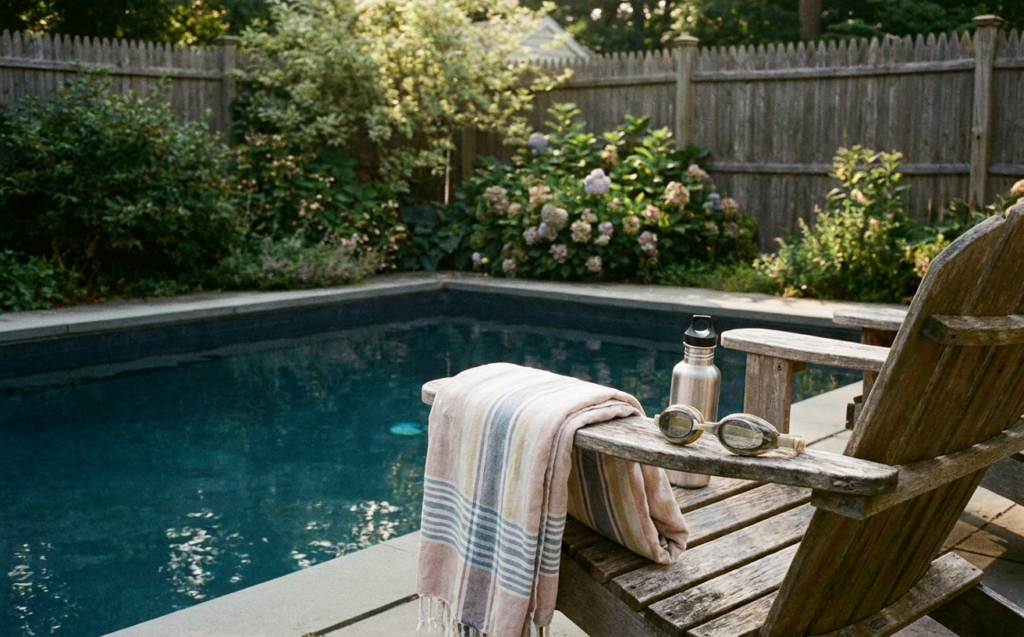
It may be early morning, late afternoon, or a short time after dinner. Remove toys from the water. Put your towel and water bottle in the same place. Keep the deck clear.
This tells your brain the pool is temporarily a practice space.
You do not need the whole backyard to feel serious. You only need enough order to help the body focus.
Track Comfort, Not Just Distance
Returning swimmers often measure progress by how far they can swim. That is one option, but it is not the only one.
Track comfort too.
Can you breathe more calmly than last week?
Do your shoulders feel less tense?
Can you float longer?
Can you swim slowly without stopping from panic?
Do you feel more willing to get in the water?
These are real signs of progress.
A swimmer who feels better in the water is building the base for everything else.
Distance can come later.
Give Yourself Recovery Days
Even gentle swimming uses muscles that may not have worked that way in years. Shoulders, back, core, hips, and neck may all respond.
Do not swim hard every day at first.
Give yourself recovery days. Use the pool for walking, stretching, floating, or simply sitting near the water. That still supports the habit.
The goal is to make swimming part of life again, not to create soreness that makes you avoid it.
A sustainable return is better than an intense restart that lasts two weeks.
Consider One Lesson if You Feel Stuck
Some returning swimmers benefit from one or two lessons. Not because they are beginners, but because a trained eye can help them find what feels off.
A good instructor can notice breathing tension, body position, timing, or stroke habits that are hard to see yourself.
Choose someone patient and respectful.
You are not starting from zero. You are reconnecting with a skill.
The right guidance can make that process smoother.
Let the Water Become Familiar Again
Getting back into swimming is not only physical. It is emotional. The water may bring up old memories, old confidence, old frustration, or old expectations.
Let the process be what it is.
Some days will feel smooth. Some will feel clumsy. Some will remind you how much you missed swimming. Others will remind you that rebuilding takes time.
That is normal.
The important thing is returning.
Each quiet session gives the body another chance to remember. Each breath, glide, float, and slow stroke brings the water closer to feeling familiar again.
A backyard pool can make that return private, patient, and repeatable.
And for many adults, that is exactly the kind of comeback that lasts.